
Story Time

Last week I shared a little about the beginning of our work with Penny Lane on Nuts! Much of that production is beyond a thick fog in my memory. The impact of the work on the events that follow is clear. That’s what I’d like to share today.
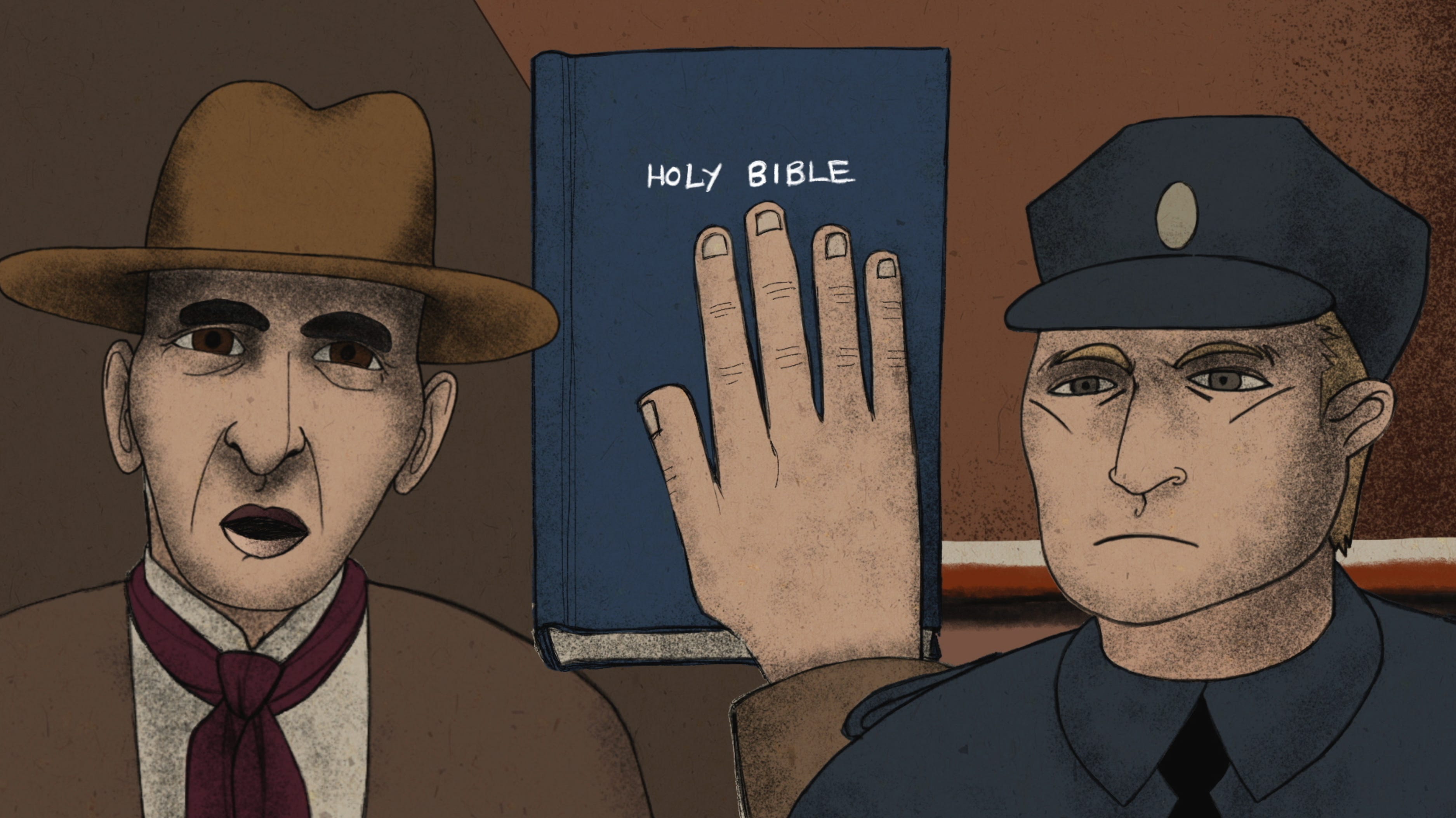
Nuts! was produced in the throes of some difficult times personally and professionally. My foundation, for better and worse, is theater kid. “The show must go on! The show must go on. The show must go on…” I couldn’t understand, for example, why people wanted to postpone the opening of a retrospective for The Ink Tank at The Art Director’s Club scheduled for 9/13/01. I still think I was right on that. If you say you’re going to have a party, you have to host the party.
When the fog lifted, production had long wrapped on Nuts!. The film was set to premiere in Rotterdam. In the meantime I was taking on less work. We had somehow animated six x 4:00+ films for a magazine that never ran them -a few of those films featuring an active porn actress/producer. Wendy Cong Zhao handled most of that on a budget that was even more limited than Nuts!. I found myself living outside of New York for the first time in over two decades. Outside of New York at the end of a line dotted with headache and heartbreak.
The retreat to the nearest-far-away-place could have burned all the bridges to my means of financial support. An independent animation producer doesn’t generate work, they conjure it. It’s harder and even more esoteric than conjuring. There are nearly 10,000 professional magicians in the United States.1 How many people make a living producing animated films outside of a deep-pocketed company? 200? 100? Fewer? If another clear path was an option, I could have picked up that fork in the road and stuck it in my animation career.
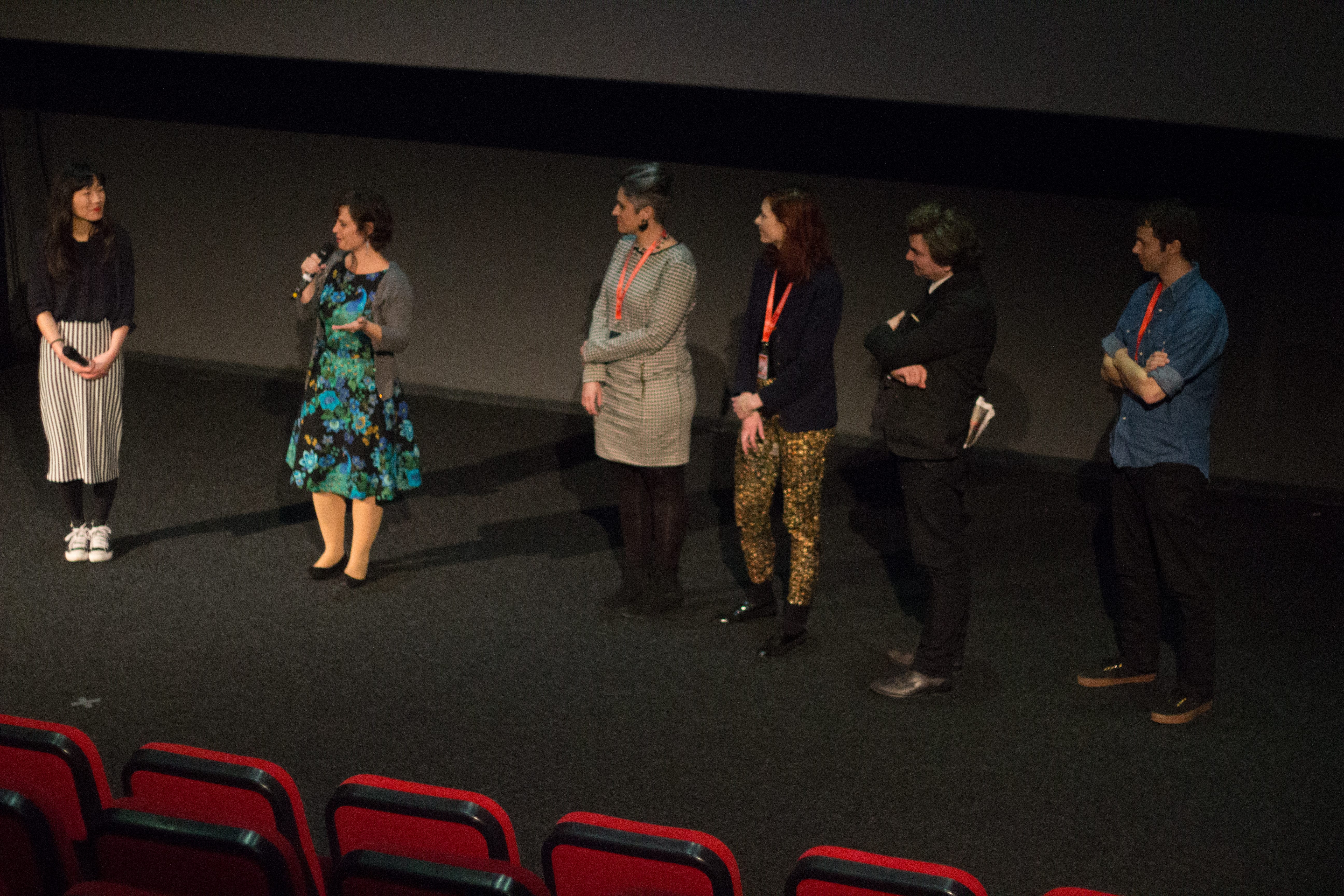
In January 2016 we learned Nuts! would premiere in Rotterdam, followed by a US premiere at Sundance. Penny got me a full pass to the film festival. “You produced 12 minutes of the film, of course you got a free pass.”2 One would think that’s standard, but it very much is not. It’s notable when artists like animators and composers and editors are offered passes. Maybe actors get festival comps, maybe editors, maybe cinematographers. I don’t know. I do know it’s unusual. Animators make high level creative contributions that dramatically impact the structure and quality of a film only to be disregarded. The production budget was highly constrained but Penny and her producers did everything else (short of profit sharing which we need to begin demanding) to support the contributing artists.
Ryanair to Rotterdam, pass pick up at the cineplex, straight walk into the next available screening.
Imagine being in the middle of a desert marching towards the horizon not even expecting a camel, or caked in grime with ten more acres to clear, imagine being handcuffed and bound in supermarket, unfed for days —then suddenly finding yourself at home. Taking a seat in the dark in a room of strangers, it’s all going to be fine. There are places you belong.
The few days at the festival with filmmakers, musicians and animators resuscitated the driving warmth of community. I returned to Dublin. Took up with the wrong woman. Made a new film.
That is the set up to the story I want to share. Or part one of that story, of the immediate ramifications of our work on Nuts!
Shortly after screening in Rotterdam, Nuts! showed at Sundance.3 A few days later I got an email from StoryCorps letting me know they’d seen it and asking to talk.
A-year-and-a-half earlier we had bid on a season of films with StoryCorps. At that point they hired Julie Zammarchi and Gina Kamentsky. I thanked them for asking us to pitch and assured them it was a good decision -they’re both fantastic filmmakers.4 We kept in touch with invitations to events and occasional announcements. They were starting a new season and wanted to see if we were interested in the project. I booked a study room in the basement of the library at University then connected with Skype (to put a date on it) back to StoryCorps in the heartland of America.
The conversation went for an hour or more. We discussed radio as a cool medium5, in particular my first encounter with Joe Frank and that one summer camp when I recorded an overnight show to cassette tape with my tent mate. We discussed visual interpretation of audio, how we strive to find a cinematic and stylistic approach to each project which supports the essential spirit of the subject.
Intellectualizing a project is a big part of our creative process. The animation industry hasn’t been inoculated from our age’s virulent anti-intellectualism. Frame-by-frame analysis of Bob Clampett and cataloging title cards count as the extreme of brains to a large portion of animators. Referring to McLuhan’s thoughts on “hot/cool” media supports are creative goals in this series. The “cool” media is low resolution, demanding the audience engage with it to fully realize this picture. We want people emotionally invested and we want them to picture themselves as participants. Articulating our ideas using this terminology helps me as a producer build a common language for collaboration.
We created a commonality -radio and oral history. I then introduced a philosophical approach that build on and complicated that foundation. This was followed up with material examples of what this means. Our design and storyboards for the series of oral histories around The Shoah, The Podkamieners, sprang from 1920s European illustration (like Frans Masereel and Berthold Bartosch’s L’idee) viewed through the haze of memory.
The conversation turned to business. I declared “I’m not really interested in creating any schedules.” To be sure they understood, I reiterated, “If you have a day you need something finished, we’ll agree on that and the work will be completed by then but I’m not going to layout a calendar and give day-by-day summaries of what we’re supposed be doing. Tell me when you need something and we’ll have it by then.” I still wasn’t sure if I wanted to come back to this business, but I was certain that I didn’t want to spend my time concerned with minute details of arbitrary timelines.
A few days later I was in the wine bar of Fallon & Byrne with Moira & Gareth waiting for the wrong woman to possibly meet us (she didn’t) when I got the email at 5:30. They met to discuss all the potential animators for the upcoming season and agreed on us. I wrote Rose Stark shortly after saying that I didn’t expect to get the contract and put no effort into doing a pitch or bid.
There would be a few more twists to come. Everything that follows derives from the relationships and decisions in here. Bidding and failing and not taking it personally. Taking on a difficult production because it was creatively worthwhile and the collaborators were people I wanted to be around. Taking a meeting to just see where it goes.
Had this path not opened at this time I have no idea where I’d be today. I might be in a different field, or on a different continent. Maybe that will happen 10 years from now. Between now and then may we all continue to make our best efforts, strive for our best and engage in the art of humanity -the act of going on in conditions which really shouldn’t be acceptable.
https://www.ibisworld.com/united-states/number-of-businesses/magicians/6388/
Not an actual quote.
and won some award. https://variety.com/2016/film/news/sundance-documentary-nuts-release-june-1201741972/
Check out Julie’s The Passenger
Marshall McLuren suggested radio as “hot” -meaning it supplies detailed information leaving the audience little room for interpretation. His cool/hot dichotomy is a fun way to think about communication but as a 21st Century person, the radio I like is sketchier. Thinking now, the most popular radio -the bro-cast and murder chronicles -might be considered very different.